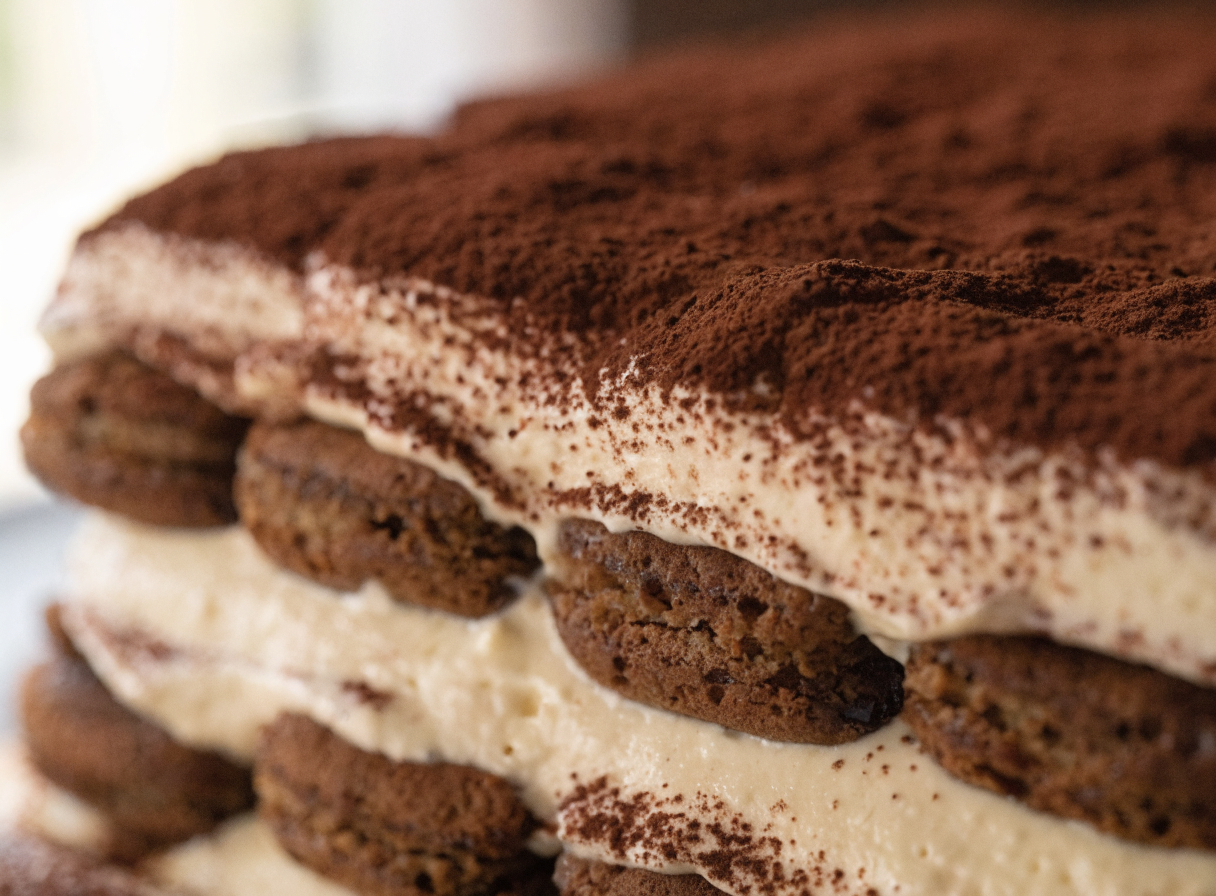
The classic tiramisu recipe is an iconic Italian no-bake dessert featuring layers of espresso-dipped ladyfingers and a rich, whipped mascarpone custard dusted heavily with dark cocoa powder. By using real pasteurized egg yolks whisked into a gentle sabayon and folding them smoothly with velvety cheese, you achieve a dessert that is pillowy, balanced, and never watery.
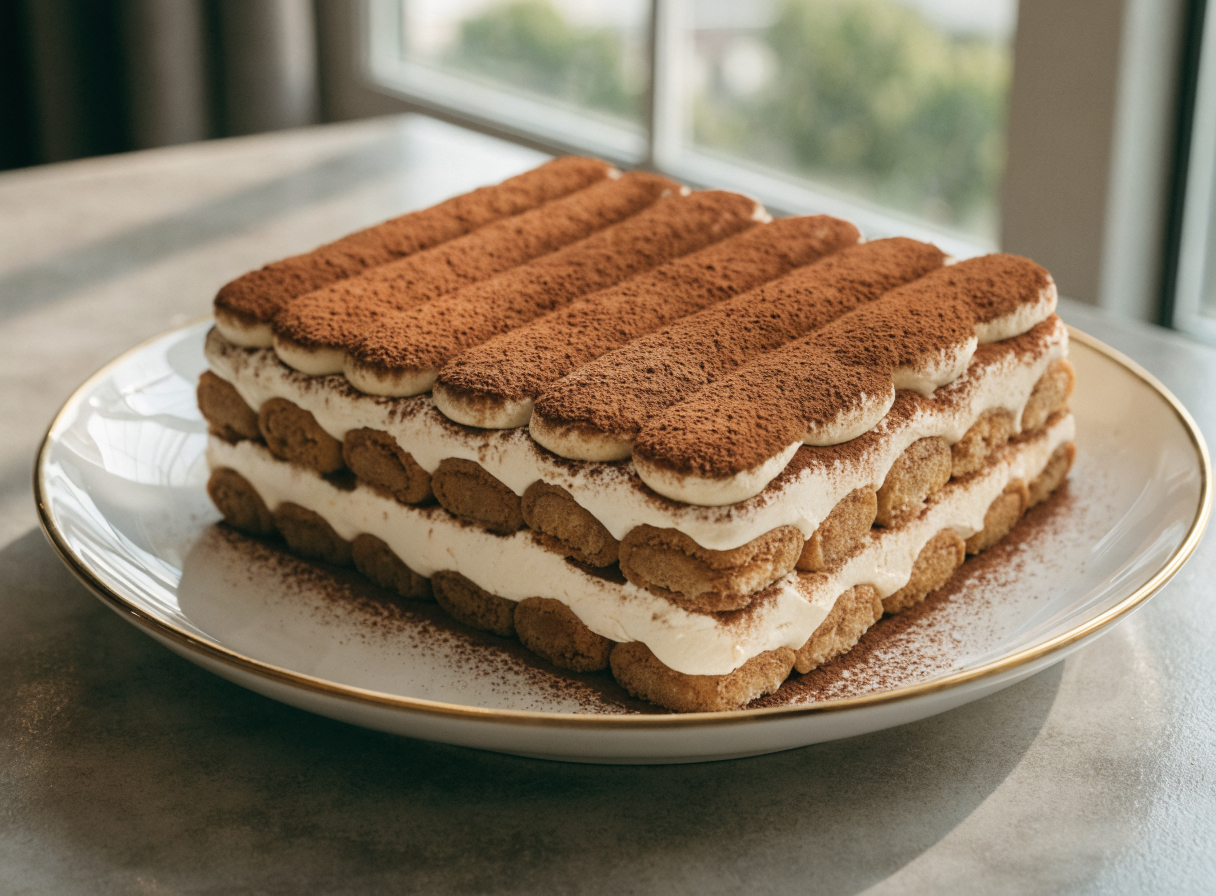
At-A-Glance Summary
- Prep Time: 30 minutes
- Cook Time: 10 minutes
- Chilling Time: 4 hours (preferably overnight)
- Total Time: 4 hours 40 minutes
- Servings: 8 generous portions
- Difficulty: Intermediate
- Key Substitutions: Swap Marsala wine for dark rum or amaretto; use decaf espresso if preferred.
Why This Classic Tiramisu Recipe Works
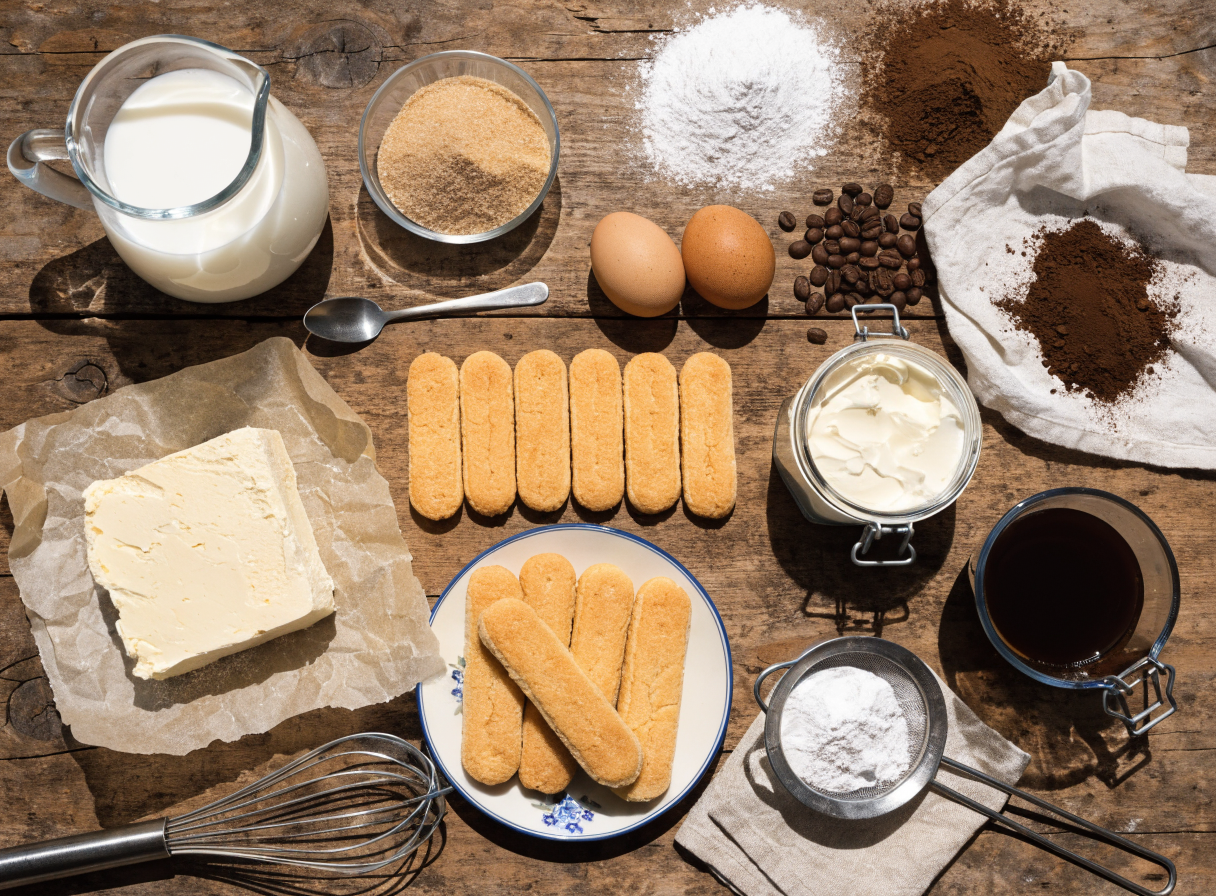
Many homemade versions fail because home cooks either use raw eggs without proper food safety checks or fail to maintain the emulsion of the mascarpone. This classic tiramisu recipe relies on a scientifically calibrated sabayon—whisking egg yolks and sugar over a double boiler until it reaches exactly 160°F (71°C). This thermal threshold not only guarantees food safety by pasteurizing the eggs, but it also cooks the proteins just enough to build a stable structural matrix that holds the heavy cream and mascarpone without weeping.
Furthermore, temperature control is non-negotiable. Whipping cold mascarpone directly with hot or even lukewarm custard will cause the high milk-fat content in the cheese to break, resulting in a grainy, curdled cream. By cooling the sabayon completely to room temperature (matching the thermal state of the mascarpone), you ensure a flawless, silky-smooth emulsion every single time.
Ingredients Needed for Your Classic Tiramisu Recipe
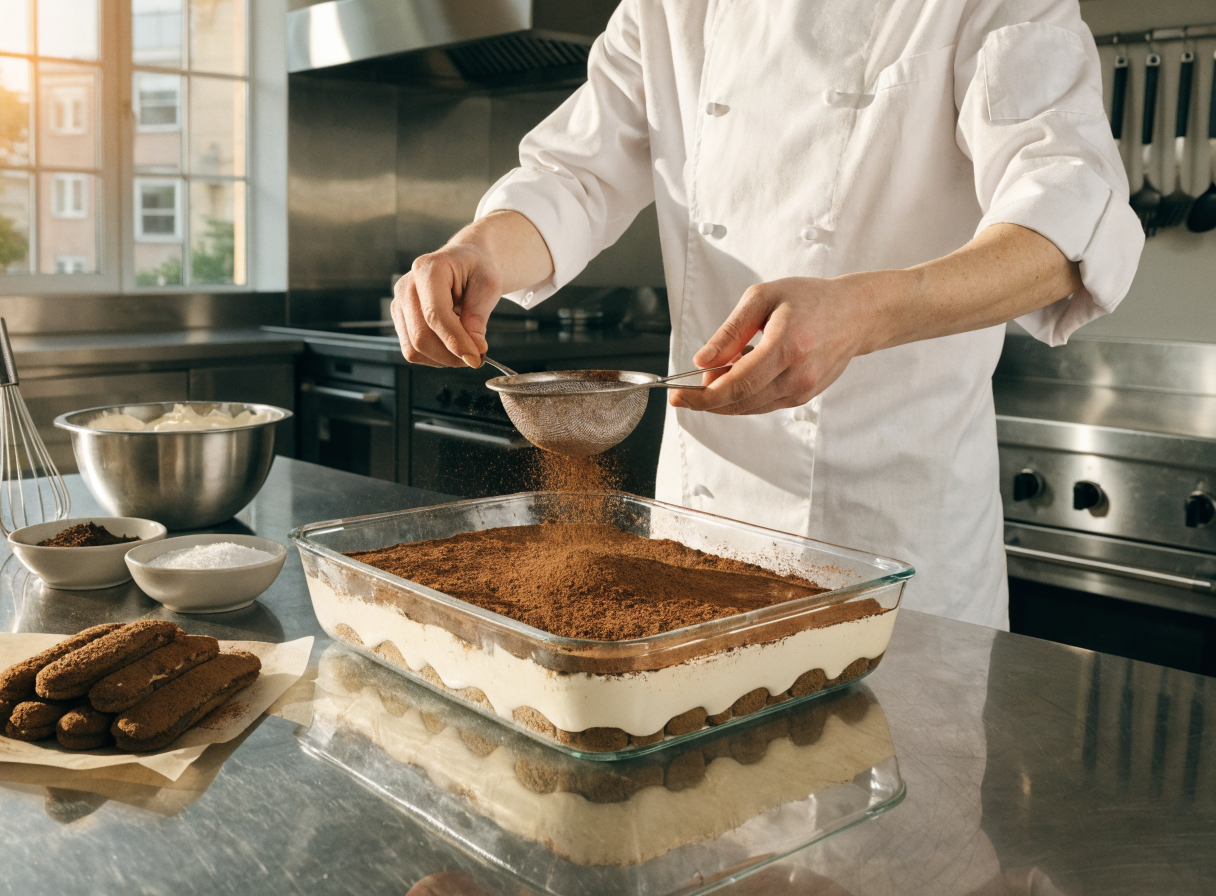
Authentic Italian baking relies heavily on the quality of its components. Because there are so few ingredients, every single one matters immensely.
- 6 large egg yolks (at room temperature; reserve whites for another use or meringues)
- 3/4 cup (150g) granulated sugar, divided
- 2/3 cup whole milk or heavy cream (for thinning the sabayon slightly)
- 16 oz (450g) Italian mascarpone cheese, brought strictly to room temperature
- 1 1/2 cups heavy whipping cream (cold)
- 2 teaspoons pure vanilla extract
- 2 cups strong brewed espresso or very strong dark-roast coffee, cooled to room temperature
- 3 tablespoons Marsala wine, dark rum, or coffee liqueur (optional, but traditional)
- 40-48 authentic Italian ladyfingers (Savoiardi)
- 3 tablespoons unsweetened Dutch-process cocoa powder (for dusting)
Step-by-Step Instructions
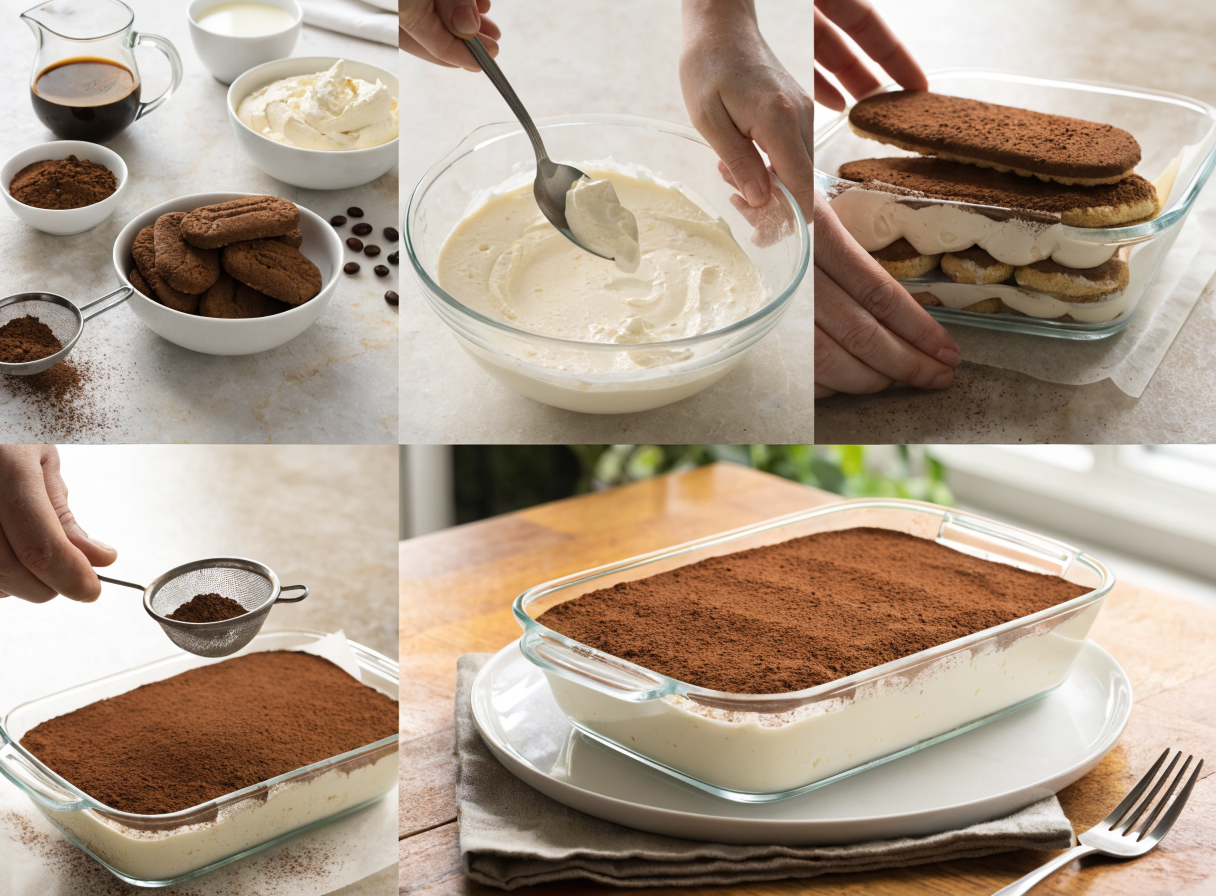
- Prepare the Sabayon Base: Set up a double boiler by bringing an inch of water to a simmer in a saucepan. In a heatproof bowl that fits snugly over the pot without touching the water, whisk together the egg yolks, 1/2 cup of the granulated sugar, and the milk until pale and smooth. Cook over medium-low heat, whisking constantly and vigorously to prevent scrambling, until the mixture thickens slightly and reaches an internal temperature of 160°F (71°C) on an instant-read thermometer. Remove from heat immediately and set aside to cool completely to room temperature, stirring occasionally to prevent a skin from forming.
- Whip the Mascarpone: While the sabayon cools, place your room-temperature mascarpone cheese into a large mixing bowl. Beat it on medium-low speed with an electric mixer just until smooth and creamy. Do not overbeat, or the cheese will split. Gently fold the cooled egg sabayon and vanilla extract into the mascarpone until completely uniform and luxurious.
- Whip the Heavy Cream: In a separate chilled bowl, whip the cold heavy cream and the remaining 1/4 cup of sugar until stiff peaks form. Gently fold this whipped cream into your mascarpone-sabayon mixture in two separate additions using a rubber spatula. This creates the signature cloud-like texture essential for a classic tiramisu recipe.
- Mix the Espresso Dip: Combine your cooled espresso and Marsala wine (or liqueur) in a shallow dish or pie plate. Pro tip: Never use hot coffee, or your ladyfingers will instantly dissolve into mush before you can transfer them to your dish.
- Assemble and Layer: Quickly dip each ladyfinger into the coffee mixture for just 1 to 2 seconds per side—they should be moist but retain a slight dry core. Arrange a single tight layer of soaked ladyfingers across the bottom of an 8×12-inch or 9×13-inch baking dish. Spread half of the mascarpone cream mixture evenly over the ladyfingers. Repeat with a second layer of dipped ladyfingers, followed by the remaining mascarpone cream. Smooth the top cleanly.
- Chill and Serve: Cover the dish tightly with plastic wrap and refrigerate for a minimum of 4 hours, though 12 to 24 hours is vastly superior for allowing the flavors to meld and slice cleanly. Just before serving, use a fine-mesh sieve to dust a thick, even layer of dark cocoa powder over the top.
Testing Notes from the Test Kitchen
The first time I tested this classic tiramisu recipe, I made a classic amateur mistake: I rushed the cooling process of the sabayon and folded it directly into the mascarpone while it was still warm. The residual heat shocked the fats in the mascarpone, immediately breaking the emulsion and turning my smooth cream into a grainy, separated disaster. I had to discard the batch, start over, and ensure the sabayon dropped all the way to 70°F (21°C) before combining. Taking that extra twenty minutes to cool your components makes all the difference between a pastry-shop finish and a culinary failure.
If you enjoy exploring classic comfort baking techniques as much as we do, you might also love testing out some good old fashioned pancakes for your weekend breakfast spread, or trying a comforting slice of homemade easy homemade sourdough bread on a lazy afternoon. For dessert variety, you can also bake a batch of treats from Grandma Ricke’s cookie recipe.
Storage and Reheating Guidelines
Because this dessert relies on raw dairy products, fresh eggs, and sponge cake, food safety and texture preservation are critical.
- Refrigeration: Store your assembled tiramisu covered tightly in plastic wrap in the refrigerator for up to 3 to 4 days. The ladyfingers will continue to soften over time, absorbing more moisture from the surrounding cream.
- Freezing Limits: You can freeze this dessert for up to 1 month if wrapped tightly in multiple layers of plastic wrap and aluminum foil. However, freezing alters the texture of the whipped mascarpone slightly upon thawing, so refrigeration is always strongly recommended over freezing.
- Reheating Instructions: Do not reheat this dish under any circumstances. Tiramisu is strictly designed to be served ice-cold straight from the refrigerator. Heating it will melt the mascarpone cream base and completely ruin the structural integrity of the ladyfingers.
Frequently Asked Questions
Can I make this classic tiramisu recipe without alcohol?
Yes, absolutely. While traditional Italian recipes often incorporate Marsala wine, dark rum, or coffee liqueur to enhance the depth and complexity of the espresso dip, you can easily omit it entirely. To compensate for the missing flavor notes without adding alcohol, many bakers substitute a splash of pure vanilla extract, almond extract, or a small spoonful of high-quality dark chocolate syrup directly into the cooled espresso liquid. The dessert remains deeply flavorful, kid-friendly, and structurally identical without any compromise in texture.
Why did my tiramisu turn out watery or soup-like?
A watery tiramisu is almost always caused by one of two common preparation errors: over-soaking the ladyfingers or under-whipping the heavy cream and mascarpone. Savoiardi cookies act like sponges; if you submerge them in coffee for more than two seconds per side, they absorb too much liquid and bleed water into your layers as it sits in the fridge. Additionally, if your heavy cream wasn’t whipped to stiff peaks or if your mascarpone was too warm when folded, the cream matrix cannot trap the moisture properly, leading to pool-like separation at the bottom of your baking dish.
What are the best ladyfingers to use for authentic results?
For an authentic Italian texture, you must seek out dry, hard Italian ladyfingers (known as Savoiardi) rather than the soft, cake-like sponge fingers found in some standard supermarket bakery sections. Brands like Matilde Vicenzi or Pavesi offer traditional Italian biscuits that feature a firm exterior crust and a porous interior crumb. This specific texture allows them to absorb the exact right amount of espresso while maintaining enough structural backbone to hold clean, distinct slices when you serve the dessert to your guests after chilling.
For further culinary background and international food safety standards regarding egg pasteurization, you can consult resources such as the U.S. Food and Drug Administration (FDA) guidelines on eggs.