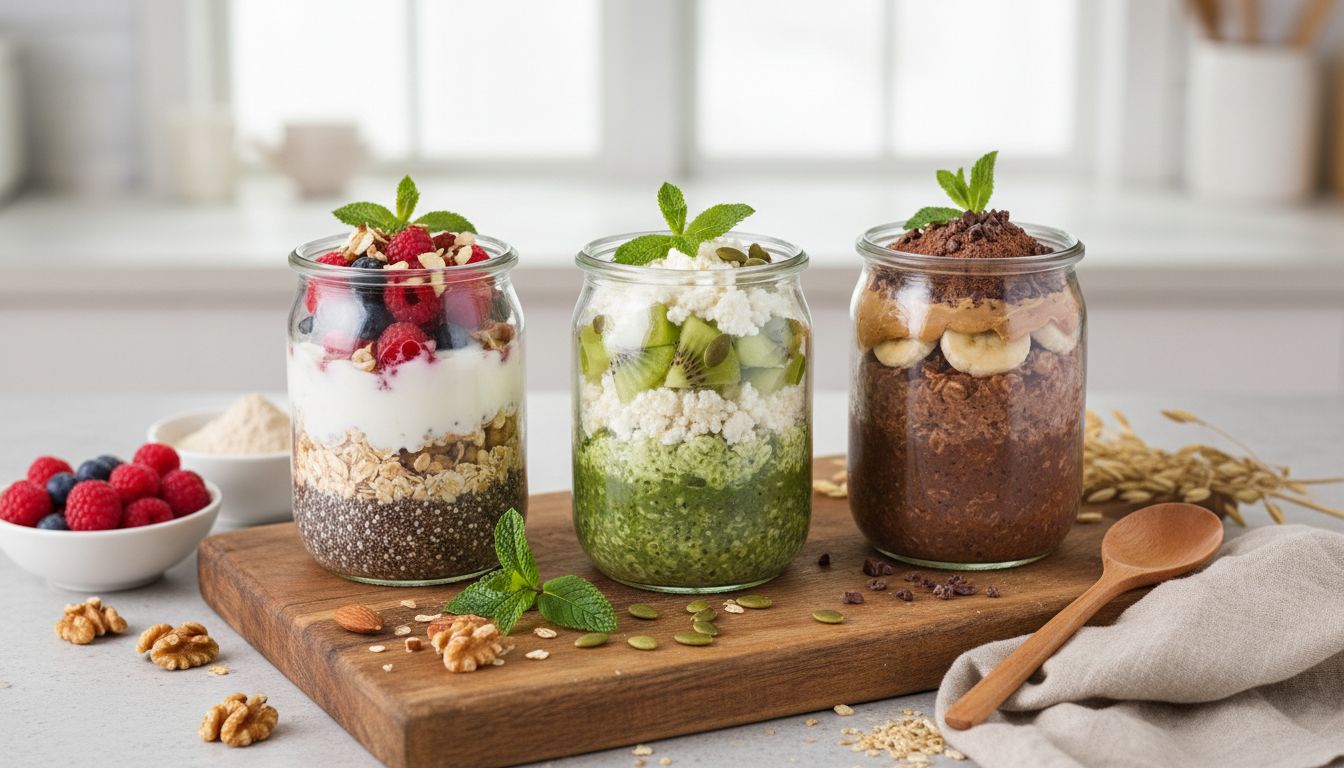
GLP-1 medications have changed how many people eat: smaller portions, less frequent hunger, and sometimes a narrower “comfort zone” for what feels good in the stomach. That’s a big reason “GLP‑1‑friendly overnight oats” is trending, dietitians are encouraging intentionally nutrient-dense foods (think fiber + protein) so that eating less doesn’t accidentally mean getting less of what your needs.
Overnight oats are a practical fit for this moment: they’re soft, customizable, easy to portion into small jars, and simple to tweak for higher protein and gentler digestion. Below you’ll find a GLP‑1-aware approach (fiber choice, hydration, portioning, reflux-friendly tweaks) and several high‑protein, gut‑healthy overnight oats recipes you can rotate through the week.
1) What “GLP‑1‑friendly” means for overnight oats right now
In 2026, the “GLP‑1‑friendly” label is less about a magical ingredient and more about smart design: smaller servings, higher nutrient density, and textures that are easy to tolerate. Because GLP‑1 receptor agonists can reduce appetite, dietitians often recommend prioritizing foods that deliver protein, fiber, and micronutrients in fewer bites, like oats, Greek yogurt, berries, and beans.
This matters because when intake drops, nutrient shortfalls can sneak in. A breakfast that’s normally “fine” can become too low in protein, too low in fiber, or too low in total calories to support energy and muscle maintenance, especially if nausea or early fullness limits how much you can finish.
Overnight oats help you be deliberate. You can start with a small base portion (for example, 1/2 cup dry rolled oats is about 140 kcal with ~4 g fiber and ~5 g protein) and then “upgrade” it with protein and gut-supportive add-ins while keeping the volume manageable.
2) Build your base: oats for soluble fiber (beta‑glucan) and heart benefits
Oats are a cornerstone ingredient because they contain beta‑glucan, a soluble fiber linked to cardiometabolic benefits. Research reviews have found that consuming oat beta‑glucan at around ≥3 g/day can reduce total and LDL cholesterol by roughly ~5% and ~10%, respectively, and the FDA has recognized significant scientific agreement that beta‑glucan soluble fiber from whole oats can lower blood cholesterol and may reduce coronary heart disease risk.
For GLP‑1 users, soluble fiber is also a strategic choice for GI comfort. Soluble fibers tend to form a gel with fluids, which can be gentler than very rough, bulky fibers, useful when you’re dealing with slowed gastric emptying, reflux, or a sensitive stomach.
Practical tip: rolled oats typically work best for overnight oats. They soften into a creamy texture (often better tolerated than crunchy toppings), and you can control sweetness and additives more easily than with some instant oat packets, which may include added sugar or sodium.
3) Protein-first “macro design” to support lean mass on GLP‑1s
Protein matters on GLP‑1s because some weight loss can come from lean tissue as well as fat. A 2025 case series noted lean soft tissue loss accounted for 26% and 40% of weight loss in recent trials, and it described approaches that pair resistance training with higher protein intakes to help preserve muscle.
In that same case series, reported protein intakes spanned wide ranges, about 0.7 to 1.7 g/kg/day based on mass and 1.6 to 2.3 g/kg/day based on fat‑free mass, alongside resistance training multiple days per week. Conference-level reporting in 2025 also linked lower protein intake with greater muscle loss in semaglutide users, with experts referencing intakes up to ~1.6 g/kg/day plus resistance training (not peer-reviewed RCT evidence, but directionally consistent with muscle-preservation strategies).
Overnight oats make hitting protein easier because you can concentrate protein without increasing portion size much: Greek yogurt, milk (or ultrafiltered milk), and optional protein powder can push a small jar into the 20, 30 g protein range, similar to several popular high‑protein overnight oats templates that list ~21, 29 g protein per serving, and one example nutrition panel showing ~25 g protein with ~12 g fiber.
4) Gut-comfort engineering: design around GLP‑1 GI side effects
Many GLP‑1 users have to navigate GI side effects. FDA labeling for Wegovy (semaglutide) lists common adverse reactions such as nausea, vomiting, diarrhea, constipation, abdominal pain, reflux/GERD, abdominal distension, and flatulence. In adult clinical-trial data for the injection, nausea occurred in 44% vs 16% with placebo, vomiting 25% vs 6%, diarrhea 30% vs 16%, and overall GI events 73% vs 47%.
That doesn’t mean you should fear fiber, it means you should be intentional. A “GLP‑1‑friendly” overnight oats jar usually does best with: (1) moderate portions, (2) more soluble fiber + adequate fluids, and (3) avoiding big spikes of fat, ultra-sweet flavors, or massive fiber boluses all at once, especially during dose increases.
Start with a smaller jar and scale up slowly. If reflux is an issue, keep acidity and minty flavors modest (citrus-heavy add-ins can be hit-or-miss). If constipation is an issue, increase fluids and gently add fiber from foods rather than jumping straight to high-dose supplements that can worsen bloating for some people.
5) Fiber add-ins (chia, berries, beans) without the bloat: a gentle ramp plan
Chia seeds are a powerful tool, especially for constipation-prone weeks, but they’re potent. Chia provides about 9.75 g of fiber per 1 oz (28.35 g), and common nutrition reporting often summarizes chia as “nearly 10 g” fiber in 2 tablespoons. That’s great, unless you go from near-zero to “fiber overload” overnight.
A GLP‑1-friendly approach is micro-dosing and titrating: 1 teaspoon of chia contains about 1.4 g fiber (a useful starting point if nausea or bloating is a concern). Let your gut adapt for several days, then increase toward 2 teaspoons or 1 tablespoon as tolerated, and always pair chia with adequate fluids because it gels.
Also consider “food-first fiber” beyond chia: berries add fiber with relatively low volume, and even small spoonfuls of beans can add fiber + protein (yes, beans in oats can work, think blended white beans in a cinnamon-vanilla base). Dietitians commonly highlight oats, Greek yogurt, berries, and beans as foods to emphasize while taking GLP‑1 medications to help cover fiber and protein needs.
6) Supplement and timing reality check: keep it simple and hydration-forward
When constipation hits, it’s tempting to throw multiple supplements at the problem. But dietitians have cautioned that high-dose fiber supplements may compound GI side effects for GLP‑1 users, so a food-based strategy (oats + berries + gradual chia) is often the smoother first step.
Psyllium husk has evidence for stool softening and cholesterol and blood-sugar support, but it’s not “nature’s Ozempic,” and it requires sufficient fluids. It may also interact with some medications, so spacing and clinician guidance matters, especially if you’re already dealing with slowed digestion and sensitive timing around meds.
As for timing: there isn’t a single best time to eat oats. Overnight oats can be breakfast, a snack, or a small “second breakfast” if your appetite is unpredictable. The most GLP‑1-friendly timing is the one that helps you meet protein and fiber goals without triggering nausea, often by keeping portions modest and consistent.
7) High-protein, gut-healthy GLP‑1 friendly overnight oats recipes (6 options)
How to use these: Each recipe makes 1 jar. Mix in a jar, refrigerate 4, 8 hours, and adjust texture in the morning with a splash of milk. If you’re early in treatment or dose-escalating, start with a smaller serving (even half a jar) and save the rest for later.
Recipe 1: “Core template” Protein + Probiotic Jar
Rolled oats + Greek yogurt + milk + chia + berries. This is the classic macro-friendly build seen in many high-protein templates (oats + Greek yogurt + chia + optional protein powder) and can land around the mid‑20 g protein range depending on your yogurt and milk choices. Keep sweetness gentle (cinnamon, vanilla, a few berries) to reduce reflux risk for some.
Recipe 2: No-protein-powder Peanut Butter Yogurt Oats
Rolled oats + Greek yogurt + milk + chia + 1 tbsp peanut butter + pinch of salt + cinnamon. This mirrors popular “no powder needed” approaches that still reach roughly ~21 g protein per jar by leaning on yogurt and nut butter. If fat feels too heavy, swap half the nut butter for powdered peanut butter.
Recipe 3: Lean & High-Protein Vanilla (with protein powder)
Rolled oats + milk + Greek yogurt + 1 scoop whey or plant protein + chia + vanilla + berries. Several batch-style recipes built like this list protein around ~29 g per serving. For GI comfort, choose a protein powder you already tolerate, and avoid sugar alcohol-heavy flavors if they trigger bloating.
Recipe 4: Reflux-Calmer Blueberry Ginger Oats
Rolled oats + Greek yogurt + milk + 1 tsp chia (start small) + blueberries + grated ginger + cinnamon. Ginger can be soothing for nausea for many people, and blueberries add fiber with relatively low acidity compared with some fruits. Keep portions small and avoid overly sweet syrups.
Recipe 5: “Constipation Support” Prune-Chia Oats (gentle version)
Rolled oats + Greek yogurt + milk + 1 tsp chia + 1, 2 chopped prunes + cinnamon. Prunes can help bowel regularity, but start modest to avoid gas. If you tolerate it well for several days, increase chia toward 2 tsp or 1 tbsp while also increasing water intake.
Recipe 6: Cinnamon Roll White-Bean Protein Oats (sneaky fiber + protein)
Blend 1/4 cup rinsed white beans with milk and Greek yogurt until smooth, then mix with oats + cinnamon + vanilla + pinch of salt + optional chia (start at 1 tsp). This keeps texture creamy and adds fiber/protein without a large volume increase, aligning with dietitian-curated GLP‑1-friendly foods like beans, oats, and yogurt.
8) Portioning, prep, and medication-aware practicality (including 2026 updates)
Portion size is the hidden “GLP‑1-friendly” lever. A baseline starting point is 1/2 cup dry rolled oats (about 140 kcal, ~4 g fiber, ~5 g protein) plus additions that raise protein and micronutrients without making the jar huge. If you’re consistently leaving food behind, shrink the jar, not the nutrition.
Meal prep can reduce decision fatigue, which is helpful when appetite cues are muted. Many high-protein overnight oats approaches are designed to hold up for several days in the fridge (often up to about 5 days), but add crunchy toppings (nuts, granola) right before eating to keep texture pleasant and avoid “dense” bites that can feel too heavy.
Also keep medication routines in mind. Late‑January 2026 reporting noted an FDA-approved pill form of Wegovy with specific dosing constraints (taken on an empty stomach and waiting before food/other meds), and GI side effects are still a consideration. If your mornings are medication-timed, overnight oats can work well later in the day as a protein-forward snack, there’s no single best time to eat oats, just the time that helps you feel good and nourished.
GLP‑1 friendly overnight oats aren’t about restriction, they’re about making a small portion count. By pairing oats’ soluble fiber (beta‑glucan) with higher-protein ingredients like Greek yogurt (and optional protein powder), you can build a jar that supports fullness, heart health, and muscle maintenance in a way that fits reduced appetite.
The best version is the one you tolerate consistently. Start with gentle portions, ramp fiber slowly (especially with chia), hydrate, and keep flavors simple if nausea or reflux flares. If you’re aiming to preserve lean mass, consider discussing protein targets and resistance training with a clinician or dietitian, especially as broader diabetes and obesity-care guidance continues to evolve (including the ADA’s 2026 Standards of Care update).