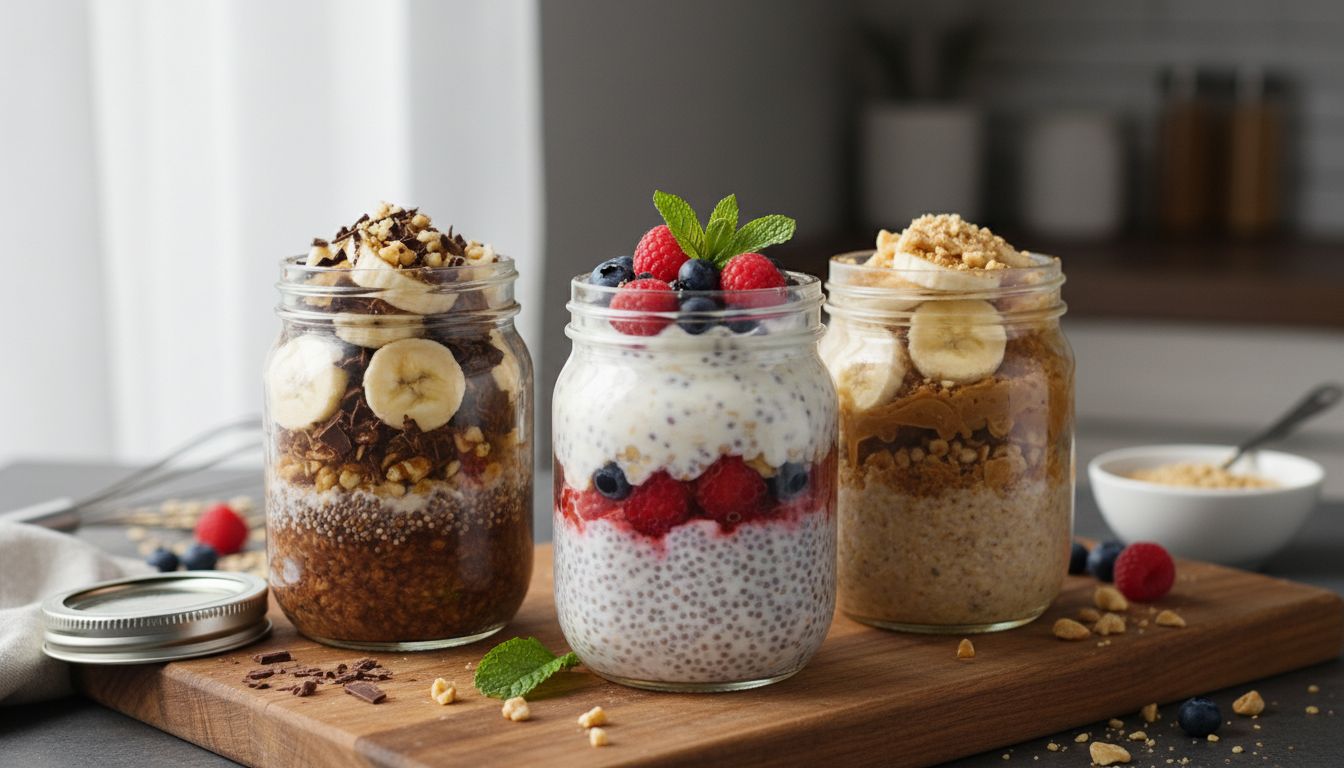
TikTok has turned a humble jar of oats into a high-protein breakfast obsession, complete with macros on screen, quick “mix-and-chill” tutorials, and flavor mashups that taste like dessert. Browse the TikTok “High Protein Overnight Oats” hub (150.3K posts) and you’ll see the same idea repeated in a thousand variations: a creamy base, a protein boost, and toppings that make it feel brand-new.
In this article, we’ll break down what TikTok creators are actually making (and why it works), then walk through viral-style recipe templates, from chocolate strawberry to cinnamon roll, PB&J vibes, and cottage-cheese “cheesecake” oats, using the ingredient lists and macro claims shared in those posts and related write-ups.
The TikTok high-protein overnight oats “base” everyone starts with
The TikTok “High Protein Overnight Oats” channel repeatedly spotlights a viral base formula built around oats + chia, with optional protein powder, Greek yogurt, and milk. It’s the kind of recipe that fits on a single screen: scoop, stir, refrigerate, and wake up to a spoonable, pudding-like breakfast.
That structure matters because each component has a job. Oats provide the carb-and-fiber backbone, chia thickens and helps the jar set, Greek yogurt adds creaminess and a substantial protein bump, and milk adjusts texture so it’s not overly dense.
TikTok also leans heavily on simple topping ideas to keep the base from getting boring. In the hub’s on-screen ingredient lists, fruit add-ons like raspberries, stewed blueberries, and pineapple show up as easy finishes, sweet, bright, and fast to portion for meal prep.
How TikTok creators hit “dessert flavor” while keeping protein high
One reason these recipes go viral is that they mimic candy bars, bakery items, and creamy desserts while still looking “macro-friendly.” Creators often combine protein powder with cocoa, cinnamon, or pudding-mix style flavoring, then add fruit or crunchy toppings on top for contrast.
A clear example from the TikTok hub is “High protein chocolate overnight oats,” which lists a simple method: use a protein shake with chia and oats, then optionally add cocoa or pudding mix. The post also includes a nutrition claim, “360 cal | 38g P | 33g C | 10g F | 10g Fiber”, which helps explain why viewers save and repeat it.
Even without complicated cooking, these jars feel indulgent because texture does the heavy lifting. Chia and oats thicken overnight, yogurt makes it creamy, and flavor additions (chocolate, cinnamon, peanut butter, fruit) create that “treat” experience that keeps people consistent with breakfast.
Recipe spotlight: Chocolate Strawberry “50g” style oats (macro-forward TikTok format)
TikTok’s macro-labeled recipes often read like mini meal plans, and the “50g Protein Chocolate Strawberry Overnight Oats” brand-style post is a perfect example. It states macros right up front: 500 calories | 48g protein | 9g fat | 58g carbs.
The ingredient list is also unusually specific, which makes it easy to replicate: 60g oats, 1 scoop whey, 120g nonfat Greek yogurt, fat-free Fairlife milk (the post lists 180 ml), plus strawberries. That combination explains the protein total, multiple dairy and whey inputs stacked into one jar.
If you want to adapt it without losing the TikTok “vibe,” keep the structure and change only one variable at a time: swap strawberries for raspberries, use stewed blueberries for a richer topping, or change the milk amount to dial in thickness. The point of these posts is repeatability, same template, new flavor.
Bulking vs cutting jars: TikTok’s two-track approach to calories
TikTok doesn’t just push one “healthy oats” recipe, it often splits versions into “weight gain vs weight loss” or “bulking vs cutting.” In the “Weight Gain vs Weight Loss Overnight Oats” comparison, the stated macros are dramatically different: “Bulking Oats: 941 Cals / 56g Protein” versus “Cutting Oats: 464 Cals / 41g Protein,” each with its own full ingredient list in the post.
Another example from the “Protein Overnight Oats Recipe” hub is “Bulking vs Cutting Chocolate PB Overnight Oats,” which lists: Bulking 1048 cals / 58g protein; Cutting 498 cals / 46g protein. The ingredient lists highlight the levers creators pull, milk choice, yogurt quantity, peanut butter, chocolate protein, and other calorie-dense add-ins.
The takeaway is practical: you don’t need separate recipes, you need a dial. Increase calories by adding nut butter, using whole milk, adding chocolate pieces, or bumping portions; decrease calories by choosing lower-fat dairy, reducing add-ins, and relying on fruit and spices for flavor. TikTok’s “two jar” comparisons make that dial easy to understand at a glance.
Meal-prep friendly variations: chocolate, strawberries & cream, banana bread
Overnight oats work best when they’re predictable, same steps, low effort, minimal dishes. TikTok’s “Healthy Breakfast Meal Prep: High-protein Overnight Oats” post leans into this with three flavor variations: chocolate, strawberries & cream, and banana bread, all built for repeatable prep.
Crucially, the method is consistent across flavors: mix measured ingredients and “set in fridge at least two hours or overnight.” That timing is a big part of the texture payoff; it’s when the oats hydrate and chia gels, turning a watery mix into a cohesive jar.
When you’re prepping multiple jars, TikTok-style flavoring is efficient: cocoa for chocolate, berries plus vanilla-y dairy for strawberries & cream, and banana with cinnamon for banana bread. You get variety without needing new techniques, just different add-ins.
The “44g protein” recipe-card trend (and why it’s so shareable)
Many viral posts are formatted like recipe cards: short ingredient list, one bold macro claim, and a clean over shot. In the TikTok “High Protein Overnight Oats” recipe-card style post, the claim is “Recipe: 44g Protein,” paired with a clear list: 1 cup oats, 1 tbsp chia, 1 scoop protein powder, 1/4 cup Greek yogurt (or Oikos protein yogurt), banana, cinnamon, and strawberries.
This style spreads because it reduces friction. You don’t have to watch a full tutorial; you can screenshot the card and copy it directly. The macro callout acts like a promise, especially for people tracking protein and trying to build a consistent breakfast routine.
It also demonstrates a core TikTok pattern: protein stacking. Instead of relying on one “high-protein” ingredient, creators combine multiple moderate-to-high protein foods (yogurt + protein powder + sometimes high-protein milk) to reach a number that feels impressive and measurable.
Why cottage cheese keeps showing up in TikTok oats (and how to use it well)
Cottage cheese has become a recurring TikTok high-protein tactic, including in oats, because it adds a lot of protein with a creamy, cheesecake-adjacent vibe. Food & Wine notes cottage cheese’s social-media resurgence and gives a concrete stat: about 14 grams of protein per half-cup, an easy “swap in” when you’re trying to push protein higher without adding more powder.
Multiple explainers echo the same logic and texture fix. A cottage-cheese overnight oats guide cites USDA FoodData Central at roughly ~12g protein per 100g and recommends blending cottage cheese for a smoother texture, important if you don’t love curds but want the protein benefit.
This trend shows up in recipe concepts too, like “Raspberry Cheesecake Overnight Oats,” which frames cottage cheese as the “cheesecake” element and states “20 grams of protein each” without protein powder. The big idea: cottage cheese can replace or complement Greek yogurt, changing both the texture and the protein math.
Cinnamon roll, PB&J, and candy-bar flavors: TikTok’s most repeatable templates
Cinnamon roll oats are one of the clearest formula-based trends. A dietitian-style TikTok “Cinnamon Roll Overnight Oats” uses the familiar structure, oats + chia + optional protein powder + Greek yogurt, then finishes with an icing-style yogurt topping for that bakery feel.
Off TikTok, a related dietitian write-up tied to the cinnamon-roll trend lists a nutrition panel of 526 kcal, 39g protein, and 9g fiber, plus a storage note of “up to 5 days.” That’s a key point: these jars aren’t just viral; they’re built for real meal prep schedules.
PB&J is another mainstream-friendly adaptation. Delish’s “PB&J Protein Oats” leans on Greek yogurt for added protein and also notes meal-prep storage “up to five days,” aligning with TikTok’s make-a culture. And if you want a candy-bar angle, TikTok’s “Snickers Overnight Oats” calls out “26 grams protein // 5 minutes” and suggests swaps like using cottage cheese for extra protein alongside the dates/chocolate/peanuts flavor concept.
TikTok didn’t invent overnight oats, but it did standardize a high-protein playbook: oats and chia for structure, Greek yogurt (and sometimes cottage cheese) for creaminess and protein, plus optional protein powder to hit a specific number. The result is a breakfast that feels customizable, measurable, and genuinely easy to repeat.
If you want to make these recipes work for you, start with the viral base from the “High Protein Overnight Oats” hub, then choose your lane: macro-forward (like the chocolate strawberry jar with stated 500 calories and 48g protein), goal-driven (bulking vs cutting comparisons), or flavor-first (cinnamon roll, PB&J, Snickers, cheesecake-style). Once you’ve nailed the base texture, the rest is just switching flavors and toppings.